Changelog of Death: How Apps Sneak Their Goodbye Into the Fine Print
Somewhere right now, a person is opening an app they haven't touched in three weeks, staring at a loading screen that spins forever, and assuming their Wi-Fi is acting up. It isn't. The app is dead. It died in a changelog. Nobody sent flowers.
This is the modern digital funeral — no eulogy, no tombstone, no notification that pings you at 2 a.m. to say hey, that thing you've been using for four years? It's gone. Just a loading spinner, then silence, then a vague support page that redirects to a homepage that no longer mentions the product at all.
Welcome to the most deliberately invisible crisis in tech.
"Minor Improvements" Is Doing a Lot of Heavy Lifting
If you've ever actually read an app update changelog — and statistically, you have not — you know the format by heart. "Bug fixes and performance improvements." "Stability updates for a smoother experience." "We've been working hard to bring you a better product."
Nobody reads this. The companies writing it know nobody reads this. That's the whole point.
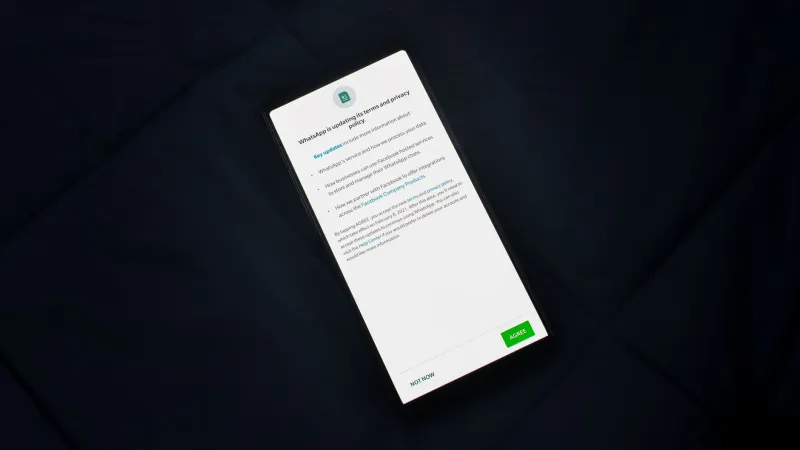
When a product is heading toward sunset, the language in changelogs starts doing something subtle and sinister. "We're transitioning some features" means those features are being deleted. "Streamlining the user experience" means the thing you liked is gone. And buried somewhere in update version 4.7.2, under three paragraphs about accessibility improvements and a note about fixing a crash on older Android devices, there will be a single sentence: "As of [date], legacy support for [product name] will be discontinued. Users are encouraged to migrate their data before [date]."
That sentence is the death certificate. You already tapped "Update All" and never saw it.
The Timeline Nobody Talks About
Here's how the actual sequence tends to play out. First, the app stops getting meaningful updates. New features dry up. The social media accounts go quiet. The last blog post is from 14 months ago and it's titled something relentlessly optimistic like "Exciting Things Are Coming!"
Then comes the changelog burial. Somewhere in a routine update, the shutdown notice appears — technically public, technically disclosed, completely invisible to the average user. Legal is satisfied. Communications has technically "announced" the sunset. Nobody has actually communicated anything.
A few weeks pass. Then the app stops loading. Users hit the support forums. The support forums have a pinned post from six weeks ago that says "As previously announced, this service will be shutting down." Previously announced. In the changelog. That one sentence. That nobody read.
The replies underneath are a five-stage grief support group in real time: confusion, denial, anger, bargaining ("is there a way to export my data?"), and finally the quiet devastation of someone who just lost four years of notes, or playlists, or saved workouts, or whatever specific irreplaceable thing the app was holding hostage.
The Hall of Shame Is Longer Than You Think
This isn't a niche phenomenon. It's practically an industry standard at this point.
Remember when Google killed Google Play Music? The sunsetting process was so drawn out and quietly communicated that users were still uploading songs to a service that had already announced its death. The migration tool to YouTube Music existed, technically. The emails went out, technically. But the number of people who showed up to the party after the lights were already off was staggering.
Or take the long, slow death of various Fitbit features after Google acquired the company. Changelogs began quietly noting "feature deprecations" with the specificity of a doctor telling you to "watch your diet" without mentioning the diagnosis. Users who relied on certain social and tracking features found them gone one morning with no memory of ever being warned.
Smaller apps are even worse, because there's no PR department managing the optics. Indie productivity tools, niche social platforms, specialized gaming utilities — these things just stop working one day. The developer hasn't posted on Twitter in eight months. The website is still up but the SSL certificate expired. The Discord server has three members left and the last message is someone asking if anyone's still there.
The Legal Cover and the Moral Void
Let's be clear about what's actually happening here. From a legal standpoint, most of these companies have covered themselves entirely. The terms of service almost certainly contained language about the right to discontinue service. The changelog technically constituted public notice. The migration window, however brief and obscure, technically existed.
From a moral standpoint, it's a different conversation.
These aren't abstract services. People build workflows around apps. They store memories in them. They pay subscription fees, sometimes for years. The deliberate choice to disclose a shutdown in the one piece of text with the lowest human readership rate on the entire internet isn't an oversight — it's a strategy. It minimizes backlash. It avoids the press cycle. It lets the company avoid the awkward "we're shutting down" social media post that would generate questions, complaints, and coverage.
Bury it in the changelog. Let users discover it organically, one confused loading screen at a time. By then, it's old news. The internet has moved on. There's nothing to screenshot.
How to Actually Catch an App Dying
Since these companies clearly aren't going to tap you on the shoulder, there are a few ways to spot the warning signs before the loading screen of doom arrives.
First: watch the update frequency. When an app that used to update every few weeks suddenly goes silent for months, something is happening. Second: check the App Store or Google Play reviews and sort by most recent. Users are often the first to notice degraded functionality and they are not quiet about it. Third — and this one is underrated — actually read the changelog once in a while. Even skimming it takes fifteen seconds and it's where the bodies are buried.
You can also follow the developer's social accounts, but at this point many studios have learned that going dark on socials is a great way to avoid questions about impending shutdowns. So, you know. The system is working exactly as designed.
The Blink You Can't Afford
The internet runs on the assumption that information is everywhere and impossible to miss. Companies have quietly learned that the opposite is also true — that the right information, placed in the right unread corner of the right interface, can be completely invisible to millions of people simultaneously.
The uninstall button nobody sees isn't on your phone. It's in version 3.11.0, patch notes, paragraph four, sentence six, right after the note about improved dark mode support on iPads.
Blink — or just tap "Update" without reading — and you'll miss it. That's the whole plan.