The Drop Economy Is Eating Your Weekend and Your Wallet
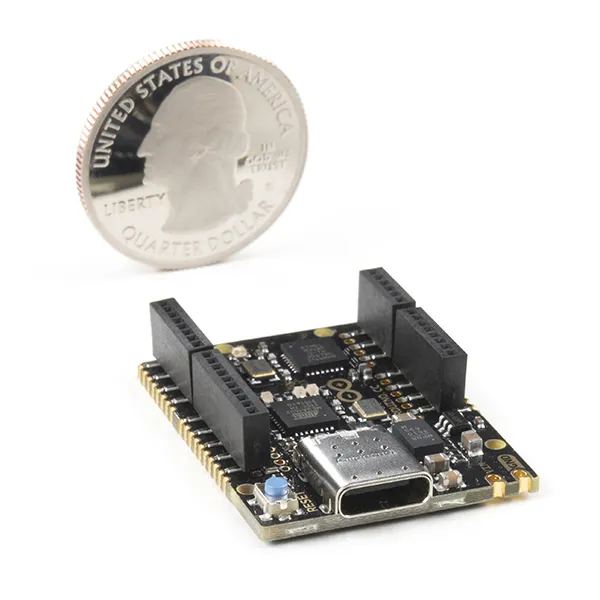
Photo: SparkFun Electronics, CC BY 2.0, via Wikimedia Commons
It's 11:47 PM on a Thursday. You have work tomorrow. You should be asleep. Instead, you're refreshing a product page with the intensity of someone defusing a bomb, because in thirteen minutes a limited-edition cosmetic skin — one that will never, ever be available again, according to the marketing copy — is going to go live. And if you miss it, you will have to live with that forever.
Or for at least six months, until they inevitably bring it back in a "throwback vault" event.
Welcome to the Drop Economy, population: exhausted.
How We Got Here
Artificial scarcity isn't a new concept. Beanie Babies. Air Jordans. Limited-print comic covers. The idea that something is more desirable when it's hard to get is older than capitalism itself, which is saying something because capitalism is extremely old and very tired.
But the digital era has turbocharged the mechanics in ways that would make a 1990s marketing exec weep with jealousy. When scarcity is artificial and digital, you can manufacture it infinitely, at zero marginal cost, with a countdown timer and a push notification. You don't need a factory. You don't need inventory. You just need a server, a FOMO-susceptible audience, and absolutely no shame.
Gaming figured this out first, or at least perfected it first. Battle passes with seasonal expiration dates. Limited skins that rotate out of the shop. Time-gated events that require you to log in daily or lose progress. Fortnite built an entire cultural identity around the anxiety of missing something. Other games watched, took notes, and started doing the same thing with varying degrees of subtlety.
Now the model has metastasized. Streaming services drop limited theatrical windows. Digital collectible platforms run 48-hour mint events. Even fast food chains are doing "limited drop" menu items with countdown pages. The entire consumer economy is starting to feel like one giant Ticketmaster queue.
The People Who Turned FOMO Into a Career
Here's the thing about the Drop Economy: for every casual fan getting burned, there's someone who figured out the system and built a life around it.
Meet the resellers, the flippers, the Discord server operators who charge membership fees for drop alerts. The people running bots that purchase limited items the millisecond they go live and then sell them on StockX for three times retail. The YouTubers whose entire channel is unboxing limited-edition items they scored through connections most fans don't have.
"I don't even play the games most of the time," admitted one collector who flips limited gaming merchandise and digital collectibles, and who very much did not want their real name attached to that quote. "I just know the schedule. I know what's going to be rare. I move fast and I sell fast. It's basically day trading but for hoodies and skin bundles."
This is the shadow economy the Drop model created: a professional class of people who treat limited releases as financial instruments, which they increasingly are. The casual fan trying to actually own the thing they love is competing against algorithmic bots and full-time resellers. The playing field isn't just uneven — it's a different sport entirely.
The Exhaustion Is the Point
Let's say the quiet part loud: the fatigue is a feature, not a bug.
A consumer who is perpetually slightly behind — who missed the last drop, who is anxious about the next one, who is checking release calendars and setting alarms — is a consumer who is engaged. Not happy, necessarily. Not satisfied. But engaged. And in the attention economy, engagement is the only metric that matters.
Battle pass systems are particularly elegant in their cruelty here. You pay upfront for access to content you then have to spend time earning. If you don't play enough, you lose content you already paid for. The system creates a psychological obligation that functions almost identically to a part-time job, except the compensation is a digital sword skin and a loading screen.
Several gaming companies have faced genuine backlash over this — Diablo IV's season pass structure got roasted extensively, and Overwatch 2's transition away from its predecessor's model remains a live grievance in certain corners of the internet. But the model persists because it works. The outrage doesn't translate to boycotts at a scale that changes behavior. People complain and then log back in because the alternative is missing the next drop.
The Collector's Dilemma
For people who genuinely love collecting — who find meaning in curation, in owning a complete set, in the physical or digital artifact as a thing worth having — the Drop Economy is particularly disorienting.
Traditional collecting had a logic to it. You could, eventually, complete a set. You could find back issues. You could acquire the thing you missed. The market was inefficient in ways that occasionally worked in your favor.
Digital drops don't work that way. Limited digital items are often genuinely gone, or available only on secondary markets at prices that make the original retail cost look like a rounding error. The NFT boom and subsequent crash was essentially a stress test of this model taken to its logical extreme — artificial scarcity applied to assets with no physical reality whatsoever, priced as though scarcity conferred value even when the underlying thing was a JPEG anyone could screenshot.
The crash happened. The lesson about sustainable scarcity economics did not appear to be learned.
Is Any of This Actually Sustainable?
Honest answer: probably not, at current velocity.
Consumer burnout is real and measurable. Engagement numbers on games that rely heavily on FOMO mechanics tend to show a specific pattern: massive spikes around drops and events, steep valleys in between, and a gradual long-term decline as players who burn out don't come back. The model extracts maximum value from a fanbase in minimum time, which is great for quarterly earnings and genuinely terrible for building a lasting community.
The streamers and digital platforms running limited-window content face a similar reckoning. If everything is urgent, nothing is urgent. If every release is the most important thing happening right now, the signal degrades into noise and people start tuning out entirely.
There's a generation of consumers — mostly younger millennials and Gen Z — who are increasingly vocal about opting out. Not with dramatic announcements, but with quiet disengagement. Letting the battle pass expire. Skipping the drop. Buying the thing six months later when it shows up on a secondary market for less than original retail because the hype evaporated.
The Fastest Finger Doesn't Always Win
At QckFck, we have a certain appreciation for things that move fast and disappear faster. It's kind of our whole thing. But there's a difference between something being genuinely fleeting — a meme that captures a moment, a trend that burns bright — and something being artificially made to feel that way so a corporation can charge you twice for the same item.
The Drop Economy is, at its core, a machine for manufacturing urgency that doesn't exist. The skin will come back. The vault will reopen. The "final" edition will get a sequel.
The only genuinely limited resource in this equation is your time and your attention.
Maybe spend it on something that doesn't require a countdown timer.